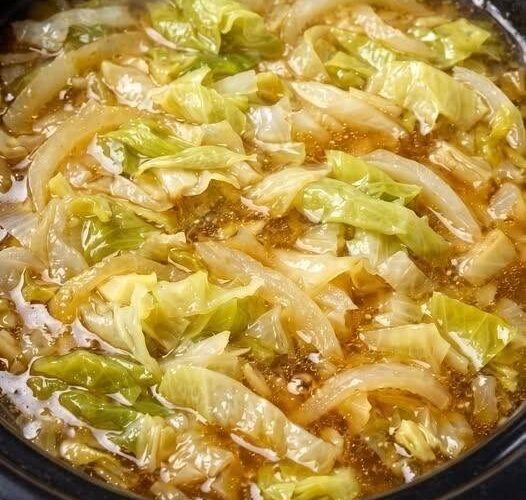
Slow-Cooked Cabbage and Onion Soup is a simple, affordable dish that turns a handful of everyday ingredients into a deeply comforting meal. Cabbage becomes tender during the long cooking process, while slowly softened onions develop a mellow sweetness that gives the broth much of its character. Garlic, herbs, soy sauce, and Worcestershire sauce add savory depth, while a little butter at the end creates a smoother finish.
The recipe is especially useful when you want something inexpensive and filling without complicated preparation. Most of the cooking happens in the slow cooker, so after the initial preparation, the soup can simmer while you work on other things.
1. Why You’ll Love This Soup
This recipe is worth keeping because it is:
- Inexpensive and made with everyday ingredients.
- Easy to prepare.
- Suitable for slow-cooker cooking.
- Naturally rich in vegetables.
- Easy to customize.
- Ideal for cold-weather meals.
- Convenient for meal preparation.
- Suitable for freezing.
- Delicious with bread or sandwiches.
- Flexible enough to accommodate additional vegetables or protein.
The most important flavor-building step happens before the slow cooker is turned on: the onions are browned in olive oil. This gives them a deeper flavor than simply adding raw onions directly to the broth.
2. Recipe Information
Recipe Name: Slow-Cooked Rustic Cabbage and Onion Soup
Course: Soup / Main Dish
Preparation Time: Approximately 15–20 minutes
Slow-Cooker Time: 6–8 hours on low or 3–4 hours on high
Finishing Time: About 15 minutes
Resting Time: 10 minutes
Difficulty: Easy
Servings: Approximately 6
3. Ingredients
Main Ingredients
- 1 medium head green cabbage
- 2 large yellow onions
- 4 garlic cloves
- 8 cups vegetable or chicken broth
- 2 tablespoons olive oil
- 1 tablespoon Worcestershire sauce
- 1 tablespoon soy sauce
- 1 teaspoon dried thyme
- 1 teaspoon black pepper
- 1 teaspoon salt, or to taste
- 2 bay leaves
- 2 tablespoons butter
Optional Ingredients
For variations, you can also prepare:
- Smoked paprika
- Red pepper flakes
- Diced carrots
- Chopped celery
- Potatoes
- Diced jalapeño
- White beans
- Shredded chicken
- Shredded turkey
- Smoked sausage
- Fresh parsley
4. Prepare the Cabbage
Begin by removing any tough or damaged outer leaves from the cabbage.
Rinse the head thoroughly under cool running water and pat it dry.
Cut the cabbage into quarters and remove the hard central core. Chop the remaining leaves into medium-sized pieces.
Try not to make the cabbage too small. Since it will cook for several hours, very finely chopped cabbage can become excessively soft.
Medium-sized pieces should become tender while retaining enough structure to make the soup interesting.
5. Prepare the Onions and Garlic
Peel the onions and slice them thinly.
Thin slices allow the onions to soften and brown relatively quickly while developing a sweet, savory flavor.
Peel and mince the garlic cloves.
Keep the garlic separate from the onions because it needs less cooking time and can burn if added too early.
6. Brown the Onions
Place a large skillet over medium heat.
Add the olive oil and allow it to warm.
Add the sliced onions and stir to coat them with the oil.
Cook for approximately 8–10 minutes, stirring regularly.
The onions should soften and begin developing golden edges.
Add the minced garlic during the final minute and cook until fragrant.
Do not let the garlic become dark brown.
This short stovetop step is one of the most valuable parts of the recipe. Browning encourages deeper flavors and gives the finished soup a more developed taste.
7. Transfer Everything to the Slow Cooker
Transfer the browned onions and garlic to your slow cooker.
Add the chopped cabbage.
Pour in the vegetable or chicken broth.
Next, add the Worcestershire sauce, soy sauce, dried thyme, black pepper, salt, and bay leaves.
Stir carefully so the cabbage and seasonings are evenly distributed.
At this stage, the mixture may look fairly simple. The long cooking process will gradually transform the vegetables and broth.
8. Choose Your Broth
The type of broth you use will influence the finished flavor.
Vegetable broth: Best if you want a vegetarian soup.
Chicken broth: Creates a fuller, more savory flavor.
If using store-bought broth, taste it before adding much salt. Some broths and soy sauces are already quite salty.
It is easier to add more seasoning at the end than to correct a soup that has become too salty.
9. Slow Cook the Soup
Cover the slow cooker.
For a longer, slower cooking process, select the low setting and cook for 6–8 hours.
For a quicker option, cook on high for approximately 3–4 hours.
Cooking times can vary between slow cookers, so use the texture of the cabbage as your main indicator.
The cabbage should become tender but should not completely disintegrate.
The onions should be extremely soft, and the broth should have a noticeably savory aroma and flavor.
10. Avoid Excessive Cooking
Although cabbage can withstand long cooking, there is a point at which the texture becomes too soft.
If your slow cooker runs particularly hot, begin checking the soup toward the earlier end of the recommended cooking range.
The ideal result is tender cabbage that still has enough structure to be recognizable in each spoonful.
11. Prepare the Finishing Butter
Approximately 15 minutes before serving, remove both bay leaves.
Add the butter to the hot soup.
Stir gently until the butter melts completely.
The butter adds richness and gives the broth a smoother mouthfeel.
Taste the soup at this stage.
Add additional salt, black pepper, thyme, soy sauce, or Worcestershire sauce only if needed.
Remember that flavors often become more noticeable as the soup rests.
12. Let the Soup Rest
Once the seasoning is balanced, turn off the slow cooker.
Allow the soup to rest for approximately 10 minutes.
This brief pause gives the ingredients time to settle and allows the flavors to blend.
Before serving, give the soup another gentle stir.
13. Serve the Soup
Ladle the hot soup into deep bowls.
For a simple presentation, sprinkle the top with freshly cracked black pepper and chopped parsley.
This soup is particularly good with something crisp or toasted alongside it.
Try serving it with:
- Crusty artisan bread.
- Garlic toast.
- Grilled cheese sandwiches.
- Dinner rolls.
- Toasted sourdough.
- A fresh green salad.
- Roasted potatoes.
- Cornbread.
The bread is also useful for soaking up the flavorful broth.
14. Smoky Variation
For a more robust version, add approximately 1 teaspoon of smoked paprika to the broth.
You can also include diced smoked sausage.
Brown the sausage separately before adding it to the slow cooker. This creates additional savory flavor and turns the vegetable soup into a more substantial meal.
15. Spicy Variation
If you enjoy heat, add one of the following:
- ¼–½ teaspoon red pepper flakes
- One finely diced jalapeño
- A pinch of cayenne pepper
- A small amount of hot sauce
Add spicy ingredients gradually so they do not overpower the cabbage and onions.
16. Hearty Vegetable Version
You can make the soup more substantial by adding additional vegetables.
Good choices include:
- 2 carrots, sliced
- 2 celery stalks, chopped
- 2 medium potatoes, cubed
- Parsnips
- Turnips
Add vegetables according to their cooking time. Dense vegetables such as potatoes and carrots should go into the slow cooker at the beginning.
17. Add Protein
To make the soup more filling, incorporate a protein source.
Options include:
- Shredded cooked chicken.
- Shredded turkey.
- White beans.
- Cooked sausage.
- Cannellini beans.
- Leftover roasted meat.
For cooked chicken or turkey, add it toward the end so it only needs to warm through.
Canned beans should be drained and rinsed before being added.
18. Vegetarian Version
For a vegetarian soup, use vegetable broth and leave out the Worcestershire sauce unless you have a vegetarian Worcestershire product.
Check packaged ingredients carefully if you have specific dietary requirements.
The combination of browned onions, garlic, herbs, soy sauce, and vegetables provides plenty of savory character even without meat.
19. Stovetop Method
No slow cooker? You can make this soup on the stovetop.
First, brown the onions in olive oil and add the garlic.
Transfer the mixture to a large heavy-bottomed pot.
Add the cabbage, broth, seasonings, and bay leaves.
Bring the soup to a gentle simmer.
Reduce the heat, cover, and cook for approximately 45–60 minutes, stirring occasionally.
The soup is ready when the cabbage is tender and the onions are soft.
Finish with butter and adjust the seasoning as described above.
20. Important Cooking Tips
For the best results:
- Brown the onions before slow cooking.
- Avoid cutting the cabbage too finely.
- Use a flavorful broth.
- Add salt gradually.
- Do not let the garlic burn during the initial sauté.
- Cook the soup gently.
- Add butter near the end.
- Remove the bay leaves before serving.
- Taste the finished broth before making final seasoning adjustments.
- Allow the soup to rest briefly before eating.
21. Storage
Allow leftover soup to cool appropriately before transferring it to airtight containers.
Refrigerate for up to 4 days.
For longer storage, divide the soup into freezer-safe containers and freeze for up to approximately 3 months.
Leave some space at the top of each container because liquid expands when frozen.
22. Reheating
To reheat on the stovetop, place the desired amount in a saucepan and warm over medium-low heat.
Stir occasionally until the soup is thoroughly heated.
If the broth has become concentrated during storage, add a small amount of water or broth.
Individual portions can also be reheated in a microwave-safe bowl using short heating intervals. Stir between intervals to distribute the heat evenly.
23. Frequently Asked Questions
Can I use red cabbage?
Yes, although the soup will have a different appearance and slightly different flavor. Green cabbage provides the most traditional result for this recipe.
Can I use white onions?
Yes. White onions can replace yellow onions. The flavor will be somewhat sharper, but the slow cooking will mellow them.
Can I skip the onion-browning step?
You can, but the finished soup will generally have less depth. Browning the onions is strongly recommended because it creates additional savory and sweet notes.
Can I add noodles?
Yes. Small noodles can make the soup more filling. For the best texture, cook them separately and add them to individual servings, especially if you expect leftovers.
Can I make it ahead?
Absolutely. This soup is well suited to advance preparation. Refrigerate it after cooling and gently reheat when ready to serve.
24. Quick Recipe Instructions
- Remove the damaged outer cabbage leaves.
- Wash and chop the cabbage into medium-sized pieces.
- Thinly slice the onions.
- Mince the garlic.
- Heat olive oil in a skillet.
- Cook the onions for 8–10 minutes until lightly golden.
- Add garlic and cook for approximately 1 minute.
- Transfer the mixture to the slow cooker.
- Add cabbage and broth.
- Add Worcestershire sauce, soy sauce, thyme, salt, pepper, and bay leaves.
- Stir thoroughly.
- Cook on low for 6–8 hours or high for 3–4 hours.
- Remove the bay leaves.
- Stir in butter during the final 15 minutes.
- Taste and adjust the seasonings.
- Let the soup rest for about 10 minutes.
- Garnish with fresh parsley if desired.
- Serve hot with crusty bread or another favorite side.
