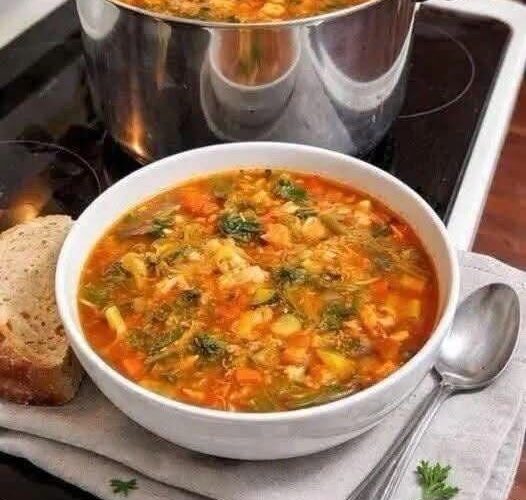
Homemade Chicken Vegetable Soup is a comforting meal that combines tender chicken, colorful vegetables, fragrant herbs, and savory broth in one satisfying bowl. It is simple enough for a weeknight dinner but hearty enough to prepare for the whole family on a cold weekend.
This recipe is also wonderfully flexible. You can use chicken thighs for a richer flavor or chicken breasts for a leaner option. The vegetables can be changed according to what you have available, making this soup an excellent way to use fresh produce before it goes to waste.
The soup develops its flavor gradually as the vegetables soften and the chicken cooks in the seasoned broth. Adding delicate vegetables toward the end keeps them colorful and prevents them from becoming overly soft.
1. Why You Will Love This Soup
This homemade chicken soup has plenty of qualities that make it worth adding to your regular meal rotation:
- It is easy to prepare.
- It uses familiar ingredients.
- It provides a satisfying source of protein.
- It contains several colorful vegetables.
- It can be customized with seasonal produce.
- It is suitable for meal preparation.
- Leftovers can be refrigerated or frozen.
- It can be served with bread, crackers, or salad.
- Rice, noodles, or grains can be added for a heartier meal.
- It makes a comforting dinner during cool weather.
2. Recipe Information
Recipe Name: Chicken Vegetable Soup
Course: Main Course or Soup
Preparation Time: 20 minutes
Cooking Time: Approximately 45 minutes
Total Time: About 1 hour 5 minutes
Servings: 6
Difficulty: Easy
3. Ingredients
For the Soup
- 1 tablespoon olive oil
- 1 pound boneless, skinless chicken thighs or breasts
- 1 medium onion, diced
- 3 garlic cloves, finely minced
- 2 medium carrots, sliced
- 2 celery stalks, chopped
- 2 medium potatoes, cut into small cubes
- 1 cup green beans, trimmed and cut into short pieces
- 1 cup sweet corn
- 1 cup green peas
- 6 cups chicken broth
- 1 teaspoon dried thyme
- 1 teaspoon dried parsley
- ½ teaspoon dried oregano
- 1 bay leaf
- Salt, to taste
- Black pepper, to taste
- Fresh parsley for garnish
Optional Ingredients
You can also add:
- Cooked rice
- Egg noodles
- Barley
- Sliced mushrooms
- Chopped zucchini
- Baby spinach
- Kale
- Additional carrots
- Fresh herbs
4. Choose the Chicken
Both chicken thighs and chicken breasts work well in this soup.
Chicken thighs contain more fat and tend to remain juicy during cooking, giving the broth a slightly richer character.
Chicken breasts have a leaner texture and a milder flavor. They are a good choice if you prefer a lighter soup.
Whichever option you choose, cut very large pieces into manageable portions so they cook evenly.
5. Prepare the Vegetables
Wash the vegetables thoroughly before beginning.
Dice the onion, slice the carrots, chop the celery, and cut the potatoes into similar-sized cubes.
Trim the green beans and cut them into bite-sized pieces.
Preparing everything before heating the pot makes the cooking process easier because each ingredient can be added at the appropriate stage.
Try to keep the potato pieces approximately the same size. Smaller pieces cook faster, while large uneven pieces may remain firm in the center while the outside becomes soft.
6. Cook the Onion and Garlic
Place a large soup pot or Dutch oven over medium heat.
Add the olive oil and allow it to warm.
Add the diced onion and cook for approximately 4–5 minutes. Stir occasionally until the onion becomes soft and translucent.
Add the minced garlic and cook for another 30–60 seconds.
The garlic should become fragrant without turning dark brown.
Cooking these ingredients first creates a flavorful foundation for the broth.
7. Add the First Vegetables
Add the carrots, celery, and diced potatoes to the pot.
Stir everything together and cook for approximately 3–4 minutes.
This short cooking period helps bring out the natural flavors of the vegetables before the broth is added.
There is no need to fully cook them at this stage because they will continue cooking in the liquid.
8. Add the Chicken Broth
Pour the chicken broth into the pot.
Add the dried thyme, parsley, oregano, and bay leaf.
Season with a moderate amount of salt and black pepper. You can adjust the seasoning later after the soup has cooked.
Stir gently to distribute the herbs and seasonings.
Bring the liquid to a gentle boil.
9. Cook the Chicken
Carefully place the chicken into the simmering broth.
Once the liquid begins bubbling, reduce the heat to low.
Cover the pot and allow the soup to simmer gently for approximately 25–30 minutes, or until the chicken is fully cooked.
The exact cooking time depends on the size and thickness of the chicken pieces.
Avoid maintaining a rapid boil. Gentle cooking helps preserve the tenderness of the chicken and prevents the broth from becoming unnecessarily cloudy.
10. Check the Chicken
Remove one piece of chicken and check that it is thoroughly cooked.
If using a food thermometer, chicken should reach a safe internal temperature of 165°F (74°C).
Once cooked, transfer the chicken to a cutting board.
Allow it to cool for a few minutes so it is easier to handle.
11. Shred the Chicken
Use two forks to pull the chicken apart into bite-sized pieces.
You can make the pieces small for a soup with more evenly distributed ingredients, or leave them slightly larger if you prefer substantial chunks of chicken.
Return the shredded chicken to the pot.
Stir gently so it becomes incorporated into the broth and vegetables.
12. Add the Delicate Vegetables
Now add the green beans, corn, and peas.
Continue simmering the soup for approximately 8–10 minutes.
These vegetables do not require as much cooking time as the potatoes and carrots. Adding them later helps preserve their texture, color, and fresh flavor.
If using spinach, stir it in during the final few minutes. It will wilt quickly in the hot broth.
13. Taste and Adjust
Remove the bay leaf.
Taste the broth carefully.
Add more salt or black pepper if necessary.
You can also increase the herbs if you want a stronger flavor.
Remember that broth brands vary considerably in saltiness, so it is better to season gradually rather than adding a large quantity at the beginning.
If the soup tastes too concentrated, add a little water or additional unsalted broth.
14. Finish with Fresh Herbs
Turn off the heat and stir in a small amount of chopped fresh parsley.
Reserve some parsley for garnishing individual bowls.
Fresh herbs added near the end provide a brighter flavor than dried herbs alone.
15. Serve the Soup
Ladle the hot soup into bowls, making sure each serving contains a good balance of chicken, vegetables, and broth.
Top with fresh parsley.
Serve immediately with your favorite side.
The soup is particularly enjoyable with crusty bread because the bread can be used to soak up the flavorful broth.
16. Optional Additions
This recipe can easily become a different meal simply by adding another ingredient.
Rice
Add cooked rice shortly before serving. This creates a more substantial soup without significantly changing the cooking method.
Noodles
Egg noodles, small pasta shapes, or another quick-cooking variety can turn the soup into a chicken noodle vegetable soup.
If using dry pasta, consider cooking it separately or adding it according to its required cooking time.
Barley
Pearl barley adds a hearty texture and makes the soup particularly filling. It requires additional cooking time, so add it earlier in the process.
Mushrooms
Sliced mushrooms provide an earthy flavor. Add them with the carrots and celery or sauté them separately before adding them to the soup.
Zucchini
Diced zucchini cooks quickly, so add it during the later stages with the green beans.
17. Serving Suggestions
Chicken Vegetable Soup pairs beautifully with:
- Crusty bread
- Garlic bread
- Dinner rolls
- Cornbread
- Grilled cheese sandwiches
- Crackers
- Caesar salad
- Mixed green salad
- Roasted vegetables
- Toasted sourdough
For a lighter meal, serve the soup with a simple salad.
For a more filling dinner, add bread, rice, or noodles.
18. Tips for the Best Soup
Keep these practical tips in mind:
- Cut vegetables into similar sizes so they cook evenly.
- Avoid boiling the soup aggressively.
- Taste the broth before serving.
- Add delicate vegetables near the end.
- Use good-quality chicken broth for the best base flavor.
- Do not overcook the chicken.
- Remove the bay leaf before serving.
- Add fresh herbs after cooking for a brighter finish.
- If using noodles, consider cooking them separately to prevent them from absorbing too much broth during storage.
19. Common Mistakes
Overcooking the Vegetables
Vegetables should become tender but should not disintegrate into the broth.
Using Too Much Salt
Broth can already contain significant sodium. Season gradually and taste before adding more.
Boiling Too Hard
A rolling boil can cause the chicken to become tougher and may make the broth less clear.
Cutting Vegetables Unevenly
Very large pieces take longer to cook, while tiny pieces may become soft too quickly.
Adding Pasta Too Early
Pasta continues absorbing liquid as it sits. If you plan to store leftovers, cook pasta separately and add it to individual portions.
20. Storage Instructions
Allow leftover soup to cool appropriately before transferring it to airtight containers.
Refrigerate the soup and consume it within approximately 4 days.
For freezing, divide the soup into individual freezer-safe containers. Leave some space at the top because liquid expands as it freezes.
The soup can generally be frozen for up to 3 months for best quality.
If possible, freeze the soup without noodles or rice. Add freshly cooked grains when reheating for a better texture.
21. Reheating Instructions
For stovetop reheating, place the desired amount in a saucepan and warm over medium-low heat.
Stir occasionally until the soup is thoroughly hot.
If the broth has reduced during storage, add a small amount of chicken broth or water.
For microwave reheating, place a serving in a microwave-safe bowl and heat in intervals, stirring between each interval.
22. Slow Cooker Method
This soup can also be adapted for a slow cooker.
Place the chicken, onion, garlic, carrots, celery, potatoes, broth, herbs, salt, and pepper into the slow cooker.
Cook on Low for approximately 6–8 hours or High for approximately 3–4 hours, depending on your appliance and the size of the chicken pieces.
Once the chicken is cooked, shred it and return it to the slow cooker.
Add peas and corn during the final 20–30 minutes.
If using spinach, add it near the end so it remains fresh and green.
23. Rotisserie Chicken Shortcut
Using cooked rotisserie chicken is an excellent shortcut.
Prepare the onion, garlic, carrots, celery, potatoes, herbs, and broth as directed.
Cook until the vegetables are tender.
Shred the cooked rotisserie chicken and add it during the final 10 minutes. Then add the peas, corn, and other quick-cooking vegetables.
This method can significantly reduce preparation time.
24. Nutritional Considerations
The nutritional value of this soup will vary according to the chicken cut, broth, vegetables, portion size, and any optional ingredients added.
Using skinless chicken and plenty of vegetables creates a meal containing protein and a variety of nutrients. Choosing a lower-sodium broth can also help reduce the overall sodium content.
If you add rice, pasta, or potatoes, the carbohydrate content will increase.
25. Frequently Asked Questions
Can I use frozen vegetables?
Yes. Frozen peas, corn, green beans, and mixed vegetables are convenient substitutes for fresh produce. Add them toward the end because they usually require less cooking.
Can I use chicken thighs and breasts together?
Yes. You can combine both cuts, although they may have slightly different cooking times. Check that every piece is fully cooked before shredding.
Can I make this soup without potatoes?
Absolutely. Leave them out or replace them with zucchini, cauliflower, additional carrots, or another vegetable.
Can I make it gluten-free?
Yes. Use a certified gluten-free chicken broth and ensure any optional noodles or other packaged ingredients are also gluten-free.
Can I make it dairy-free?
The basic recipe contains no dairy, so it can be served as written. Just check the labels of packaged broth and other optional ingredients.
26. Quick Recipe Summary
- Prepare and chop all vegetables.
- Heat olive oil in a large pot.
- Sauté the onion for 4–5 minutes.
- Add garlic and cook briefly.
- Add carrots, celery, and potatoes.
- Pour in the chicken broth.
- Add thyme, parsley, oregano, bay leaf, salt, and pepper.
- Add the raw chicken.
- Simmer gently for approximately 25–30 minutes.
- Remove the cooked chicken.
- Shred the chicken into bite-sized pieces.
- Return it to the soup.
- Add green beans, peas, and corn.
- Simmer for another 8–10 minutes.
- Taste and adjust the seasonings.
- Remove the bay leaf.
- Stir in fresh parsley.
- Ladle the soup into bowls.
- Garnish with additional parsley.
- Serve hot with bread, crackers, or your favorite side.
This homemade Chicken Vegetable Soup is a practical, flavorful meal that can be adjusted to suit different tastes and whatever ingredients happen to be available in your kitchen. Tender chicken, sweet carrots, savory onion, fresh vegetables, and fragrant herbs come together in a comforting broth that works for weeknight dinners, meal preparation, and relaxed family meals. With simple preparation and plenty of opportunities for customization, it is a recipe you can return to throughout the year.
